The Florida Climate Challenge: Sun, Moisture & Soil
In Suwannee, Columbia, and Alachua counties, fences face unique environmental pressures that homeowners in northern states never deal with:- **Relative Humidity:** Humidity averaging 75-90% throughout summer creates an optimal environment for mold, mildew, algae, and fungal rot on unsealed wood. - **UV Exposure:** Intense subtropical sunlight degrades uninhibited plastics and strips natural moisture from wood boards, causing warping, twisting, and checking. - **Sandy Soil & Soil Moisture:** High rainfall combined with sandy soil means posts that aren't set in proper concrete footings with drainage slope shift or rot right at the ground line within 5-7 years.
---
10-Year Cost & Material Comparison
| Feature / Metric | Commercial-Grade Vinyl Fence | Pressure-Treated Pine Wood | Western Red Cedar Wood || :--- | :--- | :--- | :--- | | **Initial Material & Install Cost** | $28 - $42 / linear ft | $20 - $30 / linear ft | $26 - $38 / linear ft | | **Expected Lifespan (Florida)** | 25 - 30+ Years | 12 - 15 Years | 15 - 20 Years | | **Required Maintenance** | Rinse with hose / mild soap | Seal/Stain every 2-3 yrs ($400-$800) | Seal/Stain every 2-3 yrs ($400-$800) | | **Rot & Insect Resistance** | 100% Impervious | Resistant (chemical treatment) | Naturally Resistant | | **Warping & Twisting** | None (tongue & groove lock) | Moderate to High in summer | Low to Moderate | | **10-Year Total Cost (150 ft fence)** | ~$5,000 | ~$6,500 (incl. 3 stainings + board fixes) | ~$6,800 (incl. staining) |
---
Why Wood Fences Fail in Florida (And How We Fix It)
Most failed wood privacy fences we replace across Lake City and Live Oak didn't fail because the pickets turned gray — they failed because the posts rotted at ground level.
1. **The Ground Line Rot Zone:** Moisture accumulates right where the wooden post exits the soil. If set directly in dirt or flat concrete without slope, trapped water rots the timber post.2. **Our Post Setting Protocol:** Every wood post installed by Poole Fencing is set in concrete poured with a small crowned slope so rainwater sheds away from the wood. We also use heavy-duty galvanized steel fasteners that resist rust in high humidity.
---
When to Choose Vinyl
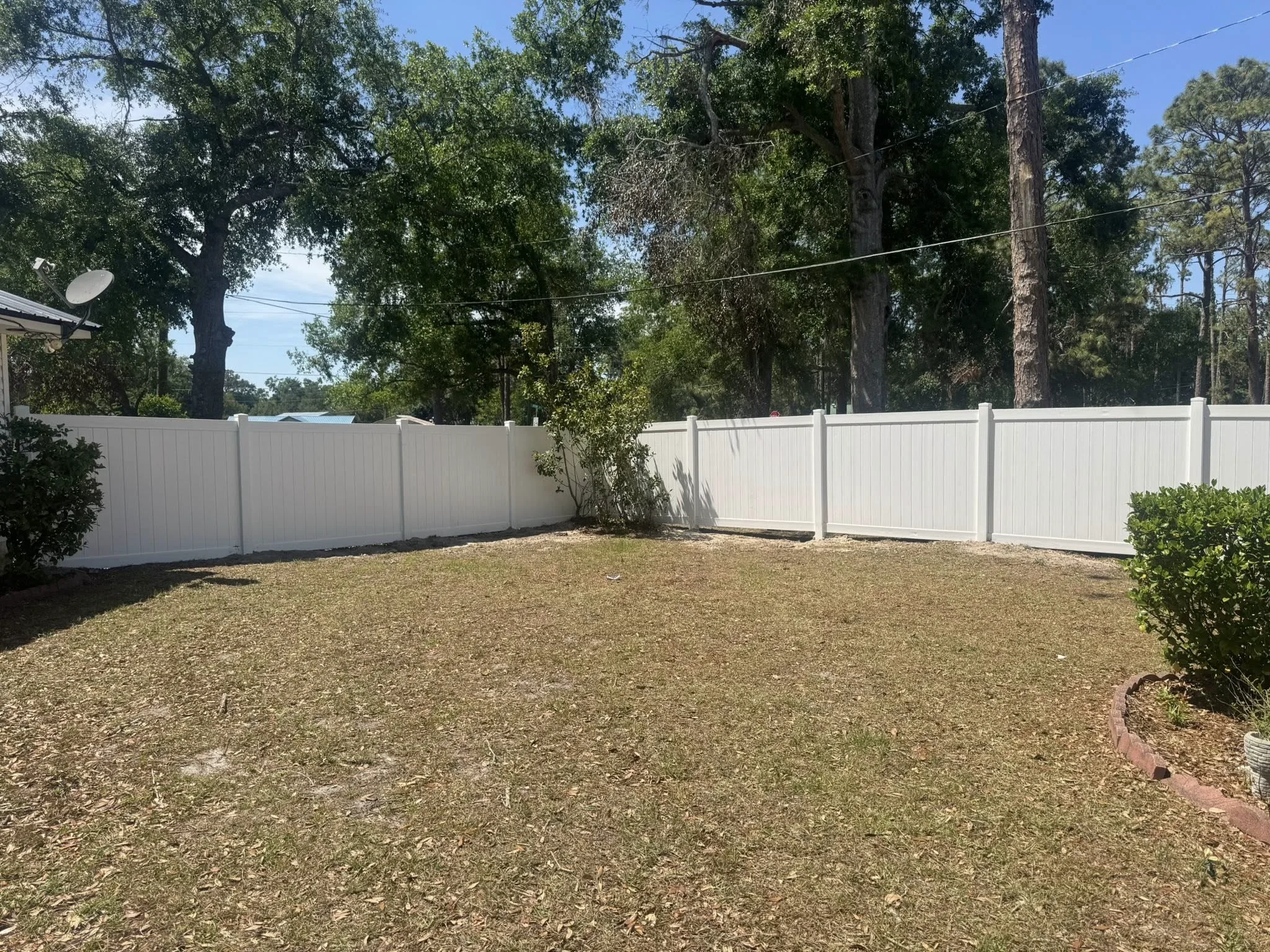
- You want zero maintenance beyond washing off red dirt or green pollen once a year. - You have a swimming pool (vinyl meets Florida pool codes and handles splash water effortlessly). - You want a clean, uniform white or tan look that stays bright for 20+ years without repainting.When to Choose Wood
- You love the warm, natural aesthetic of wood grain and natural stain finishes. - You want a custom board-on-board privacy style with zero sightline gaps. - You have sloped or uneven property where custom cut wood pickets follow the natural contour seamlessly.---
Frequently Asked Questions
Does vinyl fence yellow or turn brittle in Florida sun?Quality commercial-grade vinyl contains high concentrations of titanium dioxide (TiO2), a UV inhibitor that prevents yellowing and cracking under Florida sun. Cheap big-box vinyl panels lack sufficient TiO2 and become brittle.
#