Planning Your Horse Property: Four-Board Fence & Barn Guide
Thinking about a horse barn and classic four-board fence? Learn how to budget, design, and plan a safe, long-lasting horse property that keeps you on track.
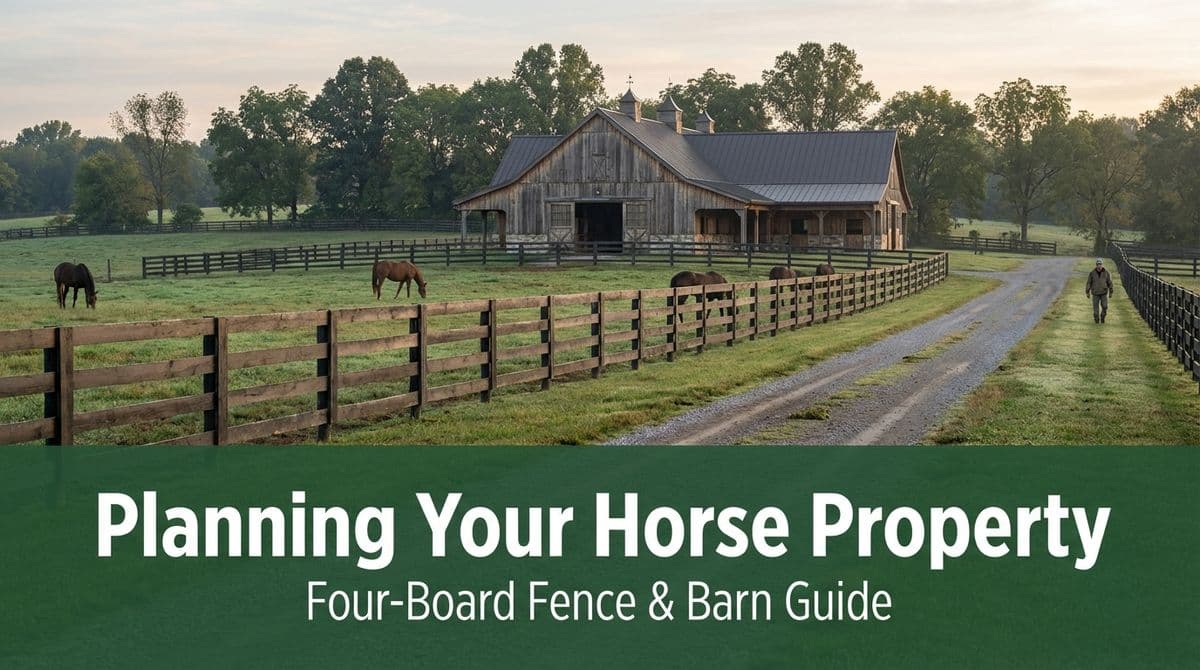
Planning a Horse Property: Starting With a Real Conversation
We recently got a call from a homeowner — let’s call him Dave — who was just starting to plan his dream horse property. He told me, “I want to put up a horse barn and I want to have a horse fence around the property… some wood horse fence with like four rows of horizontal railing.”
What Dave was really looking for was a realistic budget and a sensible design plan for a four-board wood horse fence and a barn that would keep his horses safe, look great, and satisfy his HOA. If you’re in the same boat — dreaming about a small farm or horse setup but not sure where to start — this is exactly how we walk folks through it.
Step 1: Clarify Your Horse Property Goals
When I met Dave on-site, before talking numbers, we talked goals:
- How many horses are you planning for now and in the future?
- Do you want separate paddocks, a riding area, or just perimeter fence?
- Is the barn for boarding, personal use, or a mix?
- What does your HOA or county allow in terms of size, height, and placement?
These answers decide everything from the length of fence to the barn footprint. For most homeowners, the budget is the big mystery, but you really can’t build a solid budget until you know:
- How many linear feet of fence you’ll need
- How many stalls, tack room, and storage you want in the barn
- Driveways, gates, and access points for trailers and equipment
We usually do a quick sketch on site so you can see how everything fits and how that affects cost.
Designing a Four-Board Wood Horse Fence
Dave knew he wanted that classic “four rows of horizontal railing” look. Around here, we call that a four-board horse fence. It’s popular because it’s strong, highly visible to horses, and just looks right on a farm.
Key Decisions for Your Four-Board Fence
- Post size and spacing: We typically recommend 4x4 or 6x6 treated posts, set 8' apart on center. For corners and gates, we go heavier. Skimping on posts is one of the quickest ways to shorten a fence’s life.
- Board size and orientation: Most four-board fences use 1x6 or 2x6 boards, run on the inside of the posts so the horses hit boards, not post edges, if they lean or rub.
- Height: For horses, 54–60" is typical. Ponies and minis can go a little lower, but most owners are happier keeping that 54"–60" range.
- Fasteners: Hot-dipped galvanized or coated screws/nails to resist rust and hold up in weather.
We also talk with homeowners about whether they want to add a hot wire (electric) to the inside to discourage cribbing and leaning, which can really extend the life of the boards.
Budgeting for a Four-Board Fence
Fence pricing can vary with lumber costs, terrain, and gate locations, but for planning purposes, we encourage folks like Dave to think in terms of cost per linear foot. Here’s how to rough-in your own budget:
- Walk your property line or paddock layout and measure the approximate footage.
- Add extra footage for curves, jogs, and any interior cross-fencing.
- Decide on the number and width of gates (each gate adds material and labor).
Once you have a linear footage number, we can plug in current material and labor rates and give you a realistic range. The big takeaway I shared with Dave: don’t just chase the cheapest price. The right post size, proper depth, and quality boards will last years longer, especially in tough weather.
Planning a Barn That Will Actually Last
On the call, Dave mentioned he was also budgeting for a barn and wanted it done right the first time. We told him the same thing we tell every horse owner: we don’t build flimsy “kit barns” with undersized posts. Around here, we use heavy posts (like 8x8) and design to stand up to serious storms.
Smart Barn Design Basics
When we design a barn with a customer, we walk through:
- Stall count and size: 12x12 is common for horses, but we tailor to your animals and use.
- Center aisle or shed row: Center aisle barns are great for bad weather and circulation; shed row barns are simple and budget-friendly.
- Storage and workspace: Tack room, feed room, wash bay, hay storage, and a spot for equipment.
- Ventilation and light: Proper overhangs, ridge vents, and windows make for healthier horses and a safer barn.
We also plan for trailer access and how the barn lines up with paddocks so you’re not leading horses across driveways or through tight spots.
Budgeting the Barn Alongside the Fence
Dave’s big question was, “I don’t even know where we are on cost.” That’s normal. The best way to build a budget is to have us price both the barn and fence together off the same site sketch. That way:
- You can see what the full project looks like as a package.
- We can adjust stall count, barn size, or amount of fencing to hit your target budget.
- You only have one contractor coordinating permits, inspections, and scheduling.
Sometimes we’ll phase the work — get the barn shell and core paddock done first, then add more fencing or a riding arena later as the budget allows.
Permits, HOAs, and Paperwork: Don’t Skip This Step
Like many homeowners, Dave had to submit everything to a homeowners association. That meant we needed clean sketches, basic measurements, and clear descriptions of materials and colors.
Here’s how we typically help:
- Provide a simple site plan showing barn location and fence layout
- List construction specs: post size, board count, overall fence height, roof type, siding, etc.
- Confirm we’re licensed and insured, which most HOAs and counties require
If you’re dealing with an HOA or county permitting office, let your contractor know up front. A good builder will have been through that process many times and can give you the drawings and details you need to get quick approval.
Putting Your Horse Property Plan Into Gear
When we wrapped up our visit with Dave, he finally had what he’d been missing for months: a clear sketch, a realistic budget range for both the four-board wood horse fence and the barn, and a plan for moving through HOA approval and scheduling.
If you’re just starting to plan your own horse property, here’s a simple sequence you can follow:
- Decide how many horses you’re planning for, now and later.
- Rough-sketch your barn location and fence lines on a printout or map.
- Measure approximate fence footage and think through gates.
- List must-haves vs. nice-to-haves for your barn (stall count, tack, wash bay, etc.).
- Call a contractor who can handle both fence and barn so your budget is coordinated.
With a bit of planning up front and the right materials, you’ll end up with a horse property that’s safe, beautiful, and built to last — not just this season, but for many years to come.